klar partners ltd / oleter group pest control roll-up strategy: How the Nordic Platform Model Builds Scalable Growth
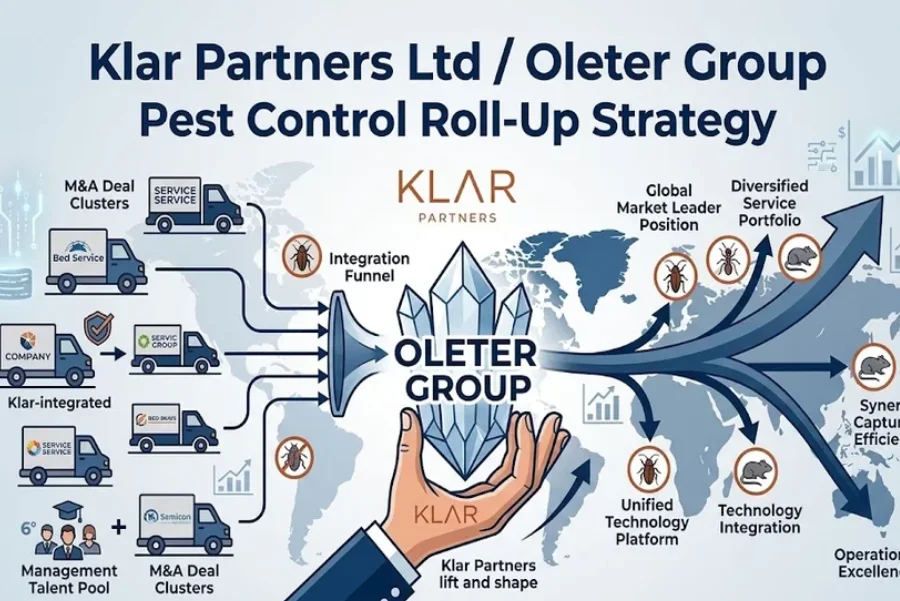
Instead of building one large company from scratch, the goal is to connect many small companies into one shared system. In Nordic countries, services like pest control and damage restoration are usually handled by small local businesses. Each one works independently, often with its own tools, systems, and habits. This creates uneven service quality across regions.
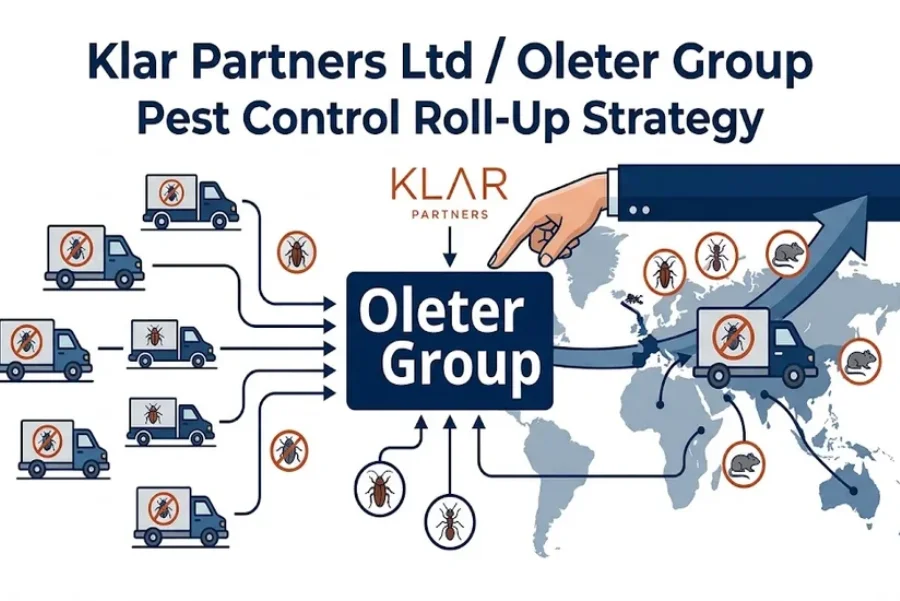
Klar Partners acts as the investor in this setup. They provide the funding and long-term direction. But they do not manage daily operations. That role belongs to Oleter Group. Oleter becomes the operational platform that brings all acquired companies together under one structure. This separation between investment and operations helps keep the system focused and scalable.
Oleter Group works like a central backbone. Every company that joins the platform continues to operate locally, but it now connects to shared systems and leadership structures. For example, a small pest control company in Sweden may still serve its local town, but it now uses Oleter’s scheduling tools, reporting systems, and training programs. This improves consistency without removing local identity.
This platform model is important because it solves a common problem in fragmented industries. Small companies often struggle to grow beyond their region. They also lack access to advanced systems or structured leadership development. By connecting them into one platform, Oleter Group creates scale while keeping local expertise intact.
How private equity connects investment and operations
Private equity firms like Klar Partners are the starting point of the entire system. Their role is to identify industries where many small companies exist but lack coordination. Pest control and damage restoration are perfect examples. These markets are stable, essential, and highly fragmented.
Klar Partners provides the capital needed to buy companies and build the platform. But they do not manage day-to-day work. Instead, they focus on long-term strategy, risk control, and value creation. This allows them to scale without getting involved in operational details.
Oleter Group becomes the execution layer. It takes investment decisions and turns them into real operational changes. It handles acquisitions, integration, and performance improvement. This separation ensures that growth stays structured and controlled.
Why Oleter Group acts as the core operating platform
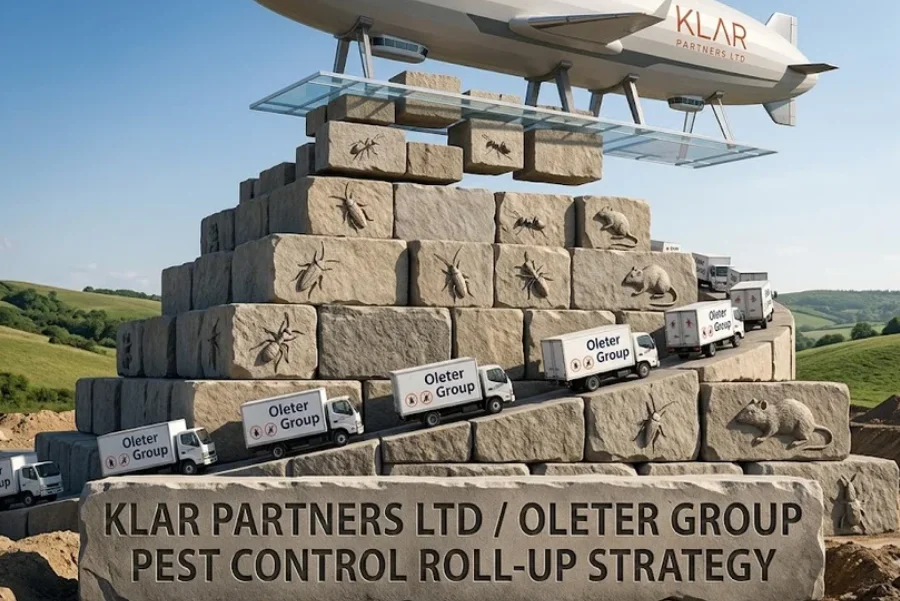
It is not just a holding company. It actively manages how each acquired business functions inside the system. After a company is acquired, it continues working locally, but now it is connected to shared processes.
Oleter introduces systems for scheduling, customer management, reporting, and technician coordination. It also provides training programs so that employees across different companies follow similar standards. This helps reduce differences in service quality between regions.
At the same time, Oleter avoids fully replacing local identity. The goal is not to erase local businesses but to strengthen them through shared infrastructure. This balance between independence and structure is what makes the platform model effective.
Why Pest Control and Damage Restoration Fit This Platform Model
The Klar Partners Ltd / Oleter Group pest control roll-up strategy works especially well in industries like pest control and property damage restoration because these services are always in demand. People need them whether the economy is strong or weak. Water damage, fire incidents, and pest problems happen regularly in homes and businesses. This creates a stable and predictable flow of work.
Another reason this model fits is fragmentation. In most Nordic countries, the industry is made up of many small companies. These businesses usually operate within a limited area and rarely expand beyond their region. They often rely on manual systems and personal relationships rather than advanced digital tools or structured leadership models. This creates an opportunity for consolidation.
Instead of building a new company from zero, Oleter Group buys existing businesses that already have customers and trust in their local markets. This reduces risk and speeds up growth. The acquired companies already understand their customers and service environment, which makes integration smoother.
Over time, this creates a network of connected businesses under one platform. Each company continues serving its own region, but it now benefits from shared systems, better tools, and stronger leadership support. This combination of stability and scalability is what makes the industry ideal for a platform strategy.
Fragmented markets with many small local companies
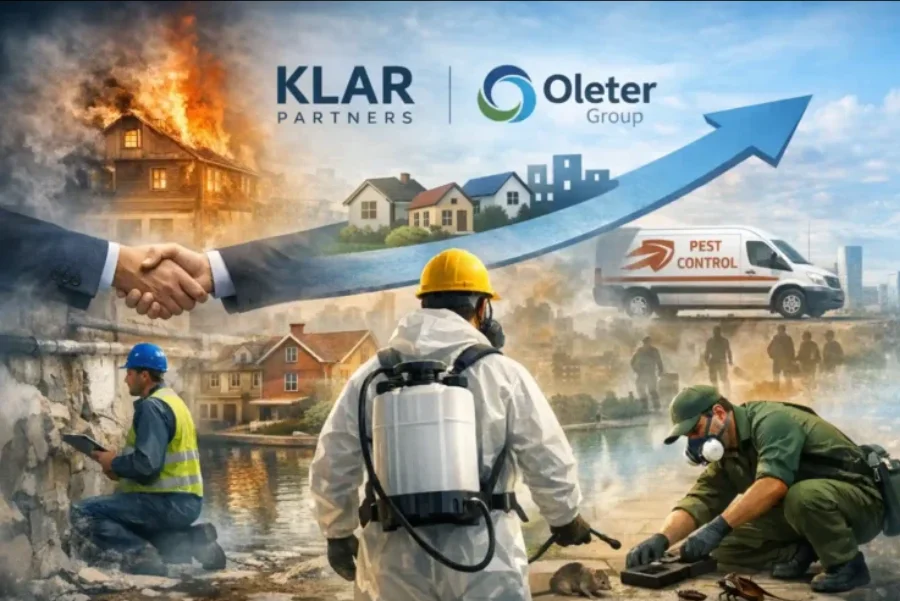
The pest control market in countries like Sweden, Norway, and Denmark is mostly local. Many companies serve only a small geographic area. This creates thousands of independent businesses that operate without coordination.
These companies often have strong relationships with local customers. People trust them because they are nearby and responsive. However, they often lack access to advanced technology, structured training, and large-scale operational systems.
This is where the platform model becomes powerful. Instead of competing with these companies, Oleter Group integrates them into a shared system. The local business continues to operate, but now it gains access to better tools, systems, and leadership support.
Stable demand from homes, businesses, and insurance work
Pest control and damage restoration are not optional services. They are needed when problems occur in homes, offices, and industrial buildings. For example, a water leak in a home requires immediate restoration. A pest infestation in a warehouse needs fast treatment. Insurance companies also rely on these services to process claims and repairs.
This creates a steady demand cycle. Unlike seasonal industries, this work continues throughout the year. Even during economic downturns, these services are still required.
Insurance partnerships also add stability. Many jobs are linked to claims, which ensures a consistent flow of work for service providers within the platform.
Why recurring services make scaling easier
Many pest control services are not one-time jobs. They require ongoing visits and maintenance. For example, businesses often schedule regular inspections to prevent infestations. Homes may need seasonal treatments to avoid recurring issues.
This creates recurring revenue, which is important for scaling. When companies are part of a platform like Oleter Group, they already have repeat customers. The platform does not need to rebuild demand from scratch. Instead, it focuses on improving coordination and efficiency.
Recurring services also make planning easier. Teams can be scheduled in advance, resources can be allocated more efficiently, and growth becomes more predictable.
How the Roll-Up Strategy Works in Practice
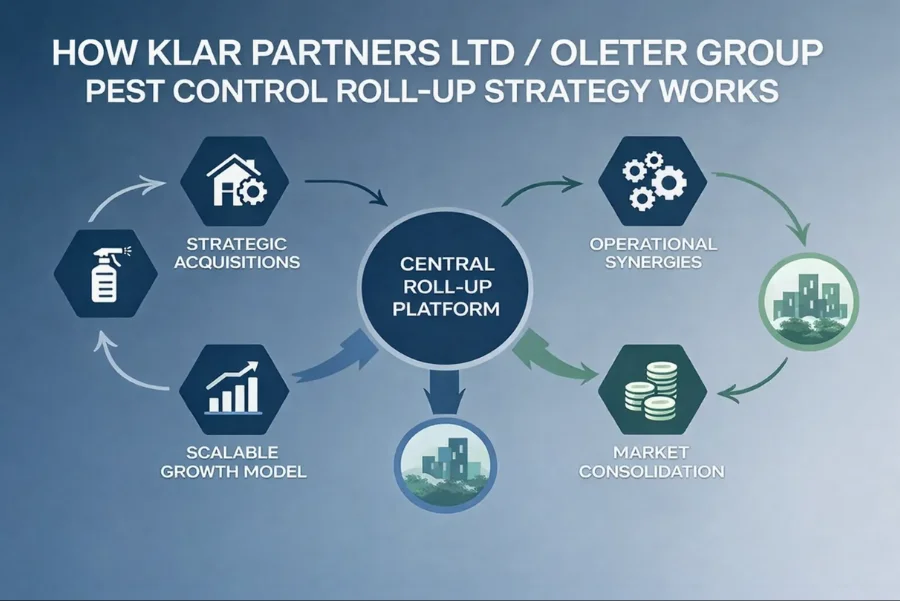
The Klar Partners Ltd / Oleter Group pest control roll-up strategy follows a clear and structured process. It is not about random acquisitions. Each step is designed to build a stronger and more connected system over time.
The process begins with identifying strong local companies. These are businesses that already have stable operations, loyal customers, and good reputations. The goal is to acquire companies that are already performing well rather than trying to fix broken ones.
After acquisition, the company continues to operate locally. Employees stay in their roles, and customers continue receiving the same services. This helps maintain trust and avoids disruption. At this stage, changes are minimal and mostly behind the scenes.
Next comes integration. This is where the company becomes part of the Oleter Group platform. Shared systems are introduced, including digital scheduling tools, reporting systems, and standardized service processes. Training programs are also aligned so that teams across different regions follow similar methods.
Finally, once integration is stable, expansion begins. The platform moves into new regions such as Sweden, Norway, Denmark, and Finland. Each new acquisition strengthens the overall network, making the platform more efficient and more capable of handling larger demand. This cycle repeats continuously, creating steady and controlled growth across the Nordic region.
Step 1: Finding strong local companies
The first step in the process is careful selection. Oleter Group looks for companies that already perform well in their local markets. These businesses usually have stable revenue, experienced staff, and strong customer trust.
The focus is not on size alone. A small but well-run company can be more valuable than a large but unstable one. This reduces risk during integration and ensures smoother transitions into the platform.
Companies that are too weak or poorly managed are usually avoided because they require too much restructuring before they can be integrated effectively.
Step 2: Buying and keeping local operations running
After acquisition, the business continues operating in the same way it did before. This is important for maintaining stability. Employees stay in their roles, and customers continue working with the same team they trust.
At this stage, Oleter Group takes a careful approach. Instead of changing everything immediately, they observe how the business works. This helps identify areas where improvements can be made without disrupting daily operations.
This gradual approach reduces resistance from employees and keeps customer service consistent during the transition.
Step 3: Integrating systems and aligning standards
Integration is where real change begins. The acquired company is connected to Oleter Group’s systems and processes. This includes digital tools for scheduling, customer management, and performance tracking.
Service standards are also aligned across all companies. This ensures that customers receive consistent quality no matter where they are located. Training programs are updated so that employees follow the same procedures and best practices.
Step 4: Expanding across regions like Sweden and Norway
Once integration is stable, expansion becomes the next focus. Oleter Group starts acquiring companies in new regions, gradually building a network across multiple Nordic countries.
Each new company adds more coverage, more capacity, and more data to the system. Over time, this creates a large regional platform rather than isolated local businesses.
Building Leadership Across a Multi-Company Platform
The Klar Partners Ltd / Oleter Group pest control roll-up strategy is not only about buying companies. It is also about building leaders who can manage a growing network. When many small businesses are connected into one platform, leadership becomes more complex. Decisions are no longer made in one office. They are spread across countries, teams, and service areas.
At the top level, Klar Partners focuses on investment direction and long-term goals. They decide what kind of growth makes sense and what risks are acceptable. Oleter Group then translates these decisions into operational actions. This means leadership flows through multiple layers instead of a single chain of command.
This structure creates a leadership system that looks different from traditional companies. A local manager in Sweden may handle daily pest control operations, while still following group-wide standards. At the same time, senior leaders in Oleter Group monitor performance across multiple regions to ensure consistency.
This layered structure is important because service quality must stay stable even while the company grows. Without strong leadership alignment, one region could perform well while another falls behind. The platform model tries to avoid this imbalance by linking leadership roles together through shared systems and expectations.
Multi-level leadership from investors to local managers
In this model, leadership is shared across different levels. Klar Partners focuses on capital allocation and strategy. Oleter Group handles execution and coordination. Local companies manage direct customer service and field operations.
This creates three clear layers of leadership. Each layer has a different responsibility, but they all work toward the same goal. Investors think about long-term value. Operators focus on efficiency and integration. Local managers focus on service delivery.
This structure helps avoid confusion. Instead of one group trying to do everything, responsibilities are clearly divided.
Training leaders inside operational teams
Leadership development is not limited to senior management. It also happens inside local teams. When companies join Oleter Group, employees often receive new training programs.
These programs focus on:
- Managing teams during busy periods
- Handling customer communication clearly
- Working with digital tools and reporting systems
- Following consistent service procedures
Over time, technicians and supervisors grow into stronger operational leaders. This is important because growth depends on having capable leaders at every level, not just at the top.
The platform becomes a learning system where leadership skills are developed through real work.
Why leadership becomes a core part of growth
As the platform expands, leadership quality directly affects performance. If leadership is weak in one region, service quality drops. If leadership is strong, the region performs well and can scale faster.
This makes leadership a core business asset, not just a management function. The Klar Partners Ltd / Oleter Group pest control roll-up strategy depends on leaders who can handle complexity while keeping operations simple for frontline teams.
Good leadership also builds trust inside the organization. Employees feel more confident when expectations are clear and support systems are strong. This helps reduce turnover and improves service consistency across the network.
How Integration Works: Systems, Technology, and Standardization
Integration is one of the most important steps in the Klar Partners Ltd / Oleter Group pest control roll-up strategy. After a company is acquired, it cannot stay fully independent if the goal is to build a platform. It must connect to shared systems that allow coordination across regions.
At the core of this integration are digital tools. Many small pest control companies originally rely on manual methods such as paper schedules or basic spreadsheets. Once they join Oleter Group, they shift to structured systems for booking, reporting, and tracking service work.
This change improves visibility. Leaders can now see what is happening across multiple companies in real time. They can track jobs, monitor performance, and identify delays or gaps in service delivery. This level of control is not possible in fragmented systems.
Standardization also plays a key role. Every company begins to follow similar service steps. This does not remove local flexibility, but it ensures that basic quality standards are always met. For example, a pest inspection in Norway should follow the same safety and reporting structure as one in Sweden.
Technology and standardization work together. Technology provides the tools, while standardization defines how those tools are used. Together, they create a system that is both efficient and predictable.
Shared tools for scheduling and operations
One of the first changes after integration is the introduction of shared scheduling systems. These tools help coordinate technicians, manage appointments, and reduce delays.
Before integration, each company may have used its own system. This creates confusion when scaling. After joining Oleter Group, everything is centralized.
Shared tools help with:
- Job scheduling across regions
- Technician assignment and routing
- Real-time updates on service status
This makes daily operations more organized and efficient.
Standard service processes across countries
Standardization ensures that service quality stays consistent. Without it, customers would experience different levels of service depending on location.
Oleter Group introduces standard procedures for:
- Pest inspection methods
- Damage restoration steps
- Safety protocols
- Reporting formats
This helps create a unified customer experience across the Nordic region. It also makes training easier because employees follow the same structure everywhere.
Using technology to improve speed and coordination
Technology is a major driver of efficiency in this platform model. It connects teams, improves communication, and reduces delays.
For example, if a technician finishes a job early, the system can automatically assign a nearby task. If a customer reports urgent damage, it can be routed to the nearest available team.
This level of coordination improves response times and reduces wasted travel or downtime. It also helps managers make faster decisions based on real-time data. Over time, this improves both customer satisfaction and operational performance.
Final Words
The Klar Partners Ltd / Oleter Group pest control roll-up strategy shows how real growth happens when structure comes before size. Instead of building scattered companies, the focus is on connecting strong local businesses into one platform that works together.
This model works well in Nordic services because the market is fragmented, but demand is stable. Pest control and damage restoration are always needed, so scaling becomes more predictable when systems are aligned.
Klar Partners brings capital and long-term direction. Oleter Group turns that direction into action by integrating companies, improving operations, and building leadership at every level. Together, they create a system where small local expertise becomes part of a larger, more organized network.
What makes this approach powerful is balance. Local companies keep their identity and customer trust, while gaining better tools, training, and structure. At the same time, the platform gains consistency, efficiency, and the ability to grow across regions.
Arcadia Movers helps you move smarter with reliable, stress-free relocation services you can trust.