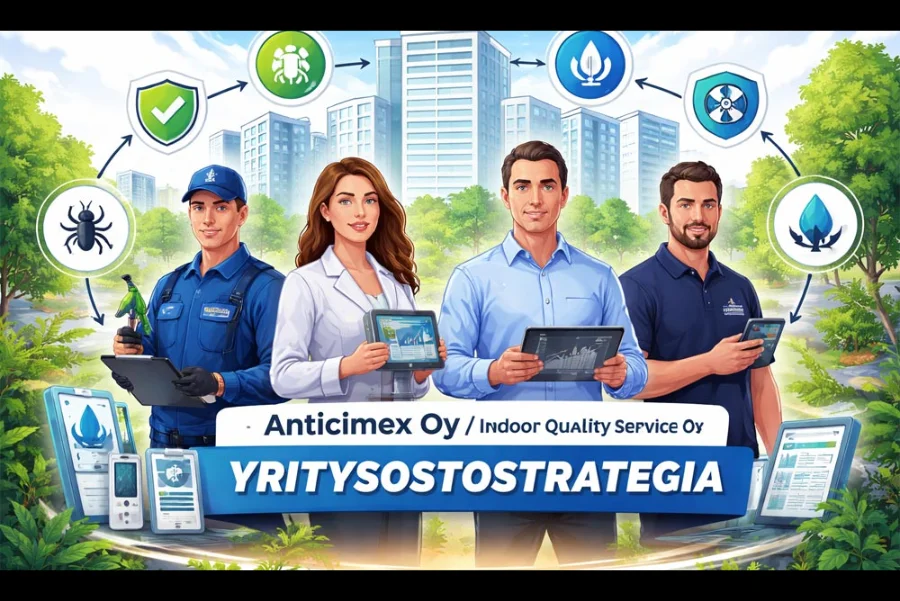
Anticimex oy / indoor quality service oy yritysostostrategia: Case Study Explained
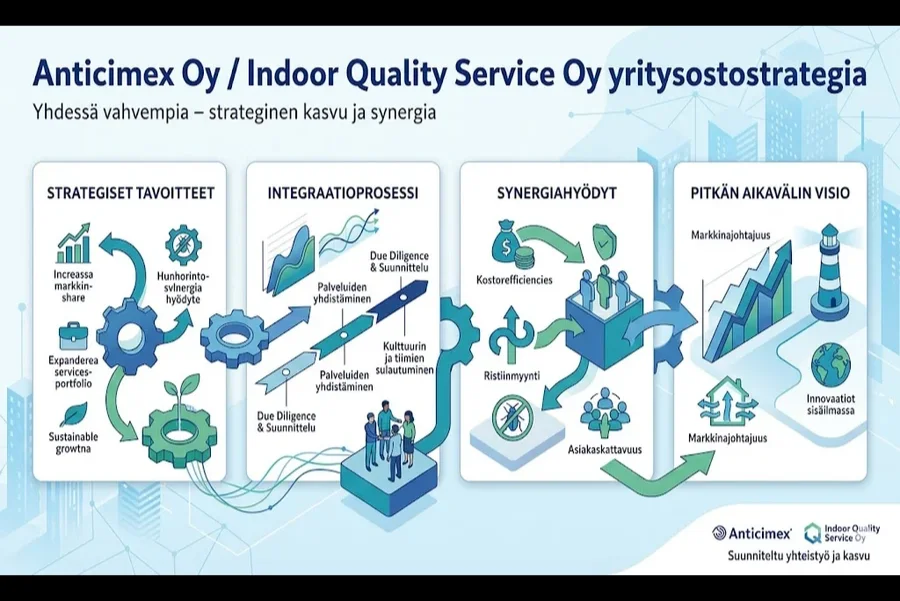
Anticimex oy / indoor quality service oy yritysostostrategia: In practice, Anticimex Oy’s acquisition strategy is based on a clear and structured process rather than quick decisions. The company first identifies businesses that already operate strongly in a specific niche, such as indoor air quality, pest control support services, or building diagnostics. The goal is not just to buy any company, but to find one that fits naturally into its long-term service model. Indoor Quality Service Oy is a good example because it already had technical expertise, a customer base in Finland, and experience in solving real building environment problems.
Once a potential company is identified, Anticimex studies it in detail. This includes financial performance, service quality, staff skills, and customer relationships. The company also looks at how the target fits into its broader vision of building health services. In this case, Indoor Quality Service Oy provided strong value because indoor air quality is closely linked to pest control and overall building safety. Both services often appear together in real property issues, which makes the combination practical rather than forced.
A very important part of the process is local knowledge. In Finland, buildings face specific challenges such as moisture damage, cold-weather ventilation issues, and seasonal pest activity. Companies that already operate locally understand these conditions better than foreign or newly created teams. By acquiring a local company, Anticimex gains immediate access to that expertise without spending years building it internally.
Cultural fit is also considered carefully. Even if a company is financially strong, integration can fail if working styles do not match. That is why Anticimex typically prefers companies that already follow structured processes and have a professional service culture. This makes it easier to align operations later without causing internal conflict or loss of productivity.
Overall, the acquisition process is designed to reduce risk and increase speed. Instead of building everything from zero, Anticimex grows by combining proven businesses into one system. This creates a stronger and more stable service network over time.
Integration Process After the Acquisition
| Phase | What Happens | Goal |
|---|---|---|
| Early Stage | Companies operate separately | Stability maintain karna |
| Middle Stage | Systems aur tools merge hotay hain | Alignment start karna |
| Final Stage | Full integration complete hoti hai | One unified system |
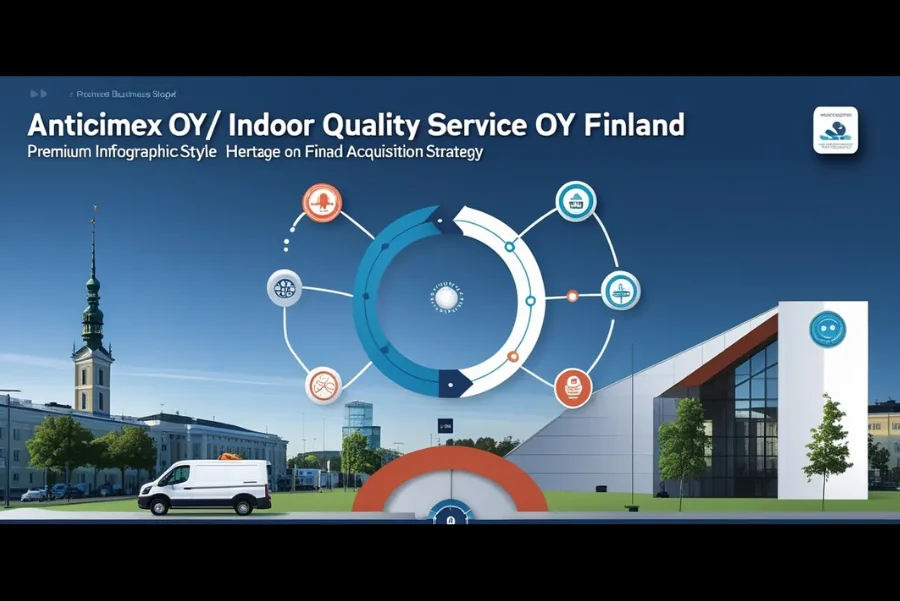
After the acquisition is completed, the most important phase begins, which is integration. This is where two separate companies start operating as one system. However, this does not happen all at once. The process is usually slow and carefully managed to avoid disruption in daily operations. In the case of Anticimex Oy and Indoor Quality Service Oy, the first step is usually to maintain normal business activities so that customers do not experience any sudden changes in service quality.
During the early stage of integration, both companies continue using their existing workflows and systems. Employees keep working in their familiar roles, which helps reduce uncertainty. At the same time, leadership teams begin mapping out differences in processes, reporting tools, and service standards. This stage is important because it helps identify what needs to be unified and what can remain local for a longer period.
As the integration moves forward, systems and tools gradually begin to merge. This can include customer management platforms, reporting systems, and service scheduling tools. Employees often receive training during this phase so they can adapt to new ways of working. This step is important because even small changes in tools can affect daily efficiency if not managed properly.
A key focus during integration is maintaining customer trust. Clients should not feel that ownership has changed in a way that affects service quality. For this reason, many companies keep the original brand or co-branding for a transition period. This helps maintain continuity while internal systems are being aligned behind the scenes.
Over time, the two organizations become more unified, but successful integration usually avoids rushing this process. A gradual approach allows both employees and customers to adjust naturally, which reduces risk and improves long-term stability.
Benefits Created by the Acquisition
| Area | Benefit |
|---|---|
| Services | Pest control + indoor air quality combined |
| Growth | Faster customer expansion |
| Cost | Shared systems reduce expenses |
| Knowledge | Teams share expertise |
The acquisition between Anticimex Oy and Indoor Quality Service Oy creates several practical benefits that directly affect both business operations and customer experience. One of the most important advantages is the expansion of services. Instead of focusing only on pest control or indoor air quality separately, the combined company can now offer a complete building health solution. This means customers can solve multiple problems through one provider, which simplifies communication and improves efficiency.
Another major benefit is faster market growth. By acquiring an already established company, Anticimex immediately gains access to existing customers and local networks. This is much faster than trying to build a customer base from scratch. In industries like indoor environment services, trust plays a major role, so having an established local presence is extremely valuable.
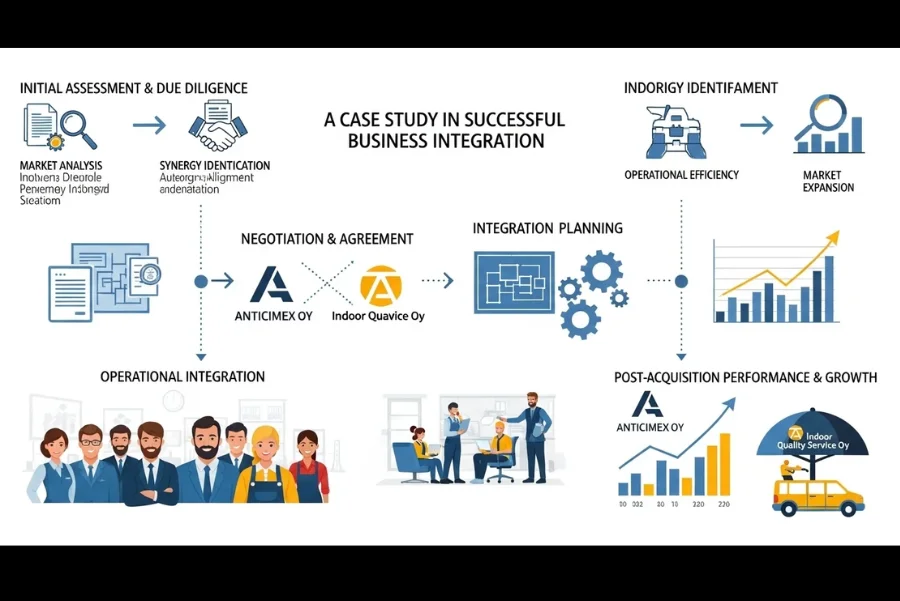
Cost efficiency also improves after acquisition. When two companies merge, they can share resources such as administrative systems, reporting tools, and operational processes. This reduces duplication and improves productivity. Over time, it allows the company to focus more on service quality and less on internal complexity.
There is also an important knowledge benefit. Employees from both companies bring different expertise and experience. When these teams work together, they can improve problem-solving and develop better service methods. For example, indoor air specialists may help pest control teams understand how moisture issues contribute to pest problems, leading to more complete solutions for customers.
Finally, the acquisition strengthens the company’s position in the market. Instead of being seen as separate service providers, the combined organization becomes a more complete and reliable partner for building health. This improves customer confidence and increases long-term contract value.
Challenges and Risks During Integration
| Challenge | Impact |
|---|---|
| Cultural differences | Team friction |
| Tech systems mismatch | Data errors |
| Communication gaps | Confusion |
| Customer disruption | Trust issues |
Even when an acquisition makes strategic sense, the integration phase is often the most difficult part. In the case of Anticimex Oy and Indoor Quality Service Oy, the main challenge comes from combining two different working cultures. Each company has its own habits, decision-making style, and service approach. When these differences meet, small misunderstandings can easily turn into bigger operational issues if they are not managed carefully.
Another common issue is communication gaps. After an acquisition, employees may feel uncertain about changes in roles, responsibilities, or reporting structures. If communication is not clear and consistent, rumors or confusion can spread inside the organization. This can slow down decision-making and reduce overall motivation. In service-based industries like indoor air quality and pest control, this can also affect response times and customer satisfaction.
Technology integration is another major challenge. Both companies may use different software for scheduling, reporting, or customer management. Merging these systems is rarely simple. Data may not align perfectly, and staff may need time to learn new tools. If this transition is rushed, it can lead to errors in service delivery or missing information in customer records.
Customer disruption is also a real risk during integration. Clients expect stable service, and any changes in processes, contact points, or reporting methods can create frustration. Even small delays or inconsistencies may affect trust, especially in industries where safety and health are involved. That is why companies often keep customer-facing operations unchanged during early integration stages.
Managing these risks requires patience and careful planning. Companies that move too fast often face higher employee turnover or customer dissatisfaction. The key is to balance change with stability so that the business continues to function smoothly while improvements are introduced step by step.
Key Lessons from the Anticimex–Indoor Quality Service Case
One of the most important lessons from this acquisition is the value of clear communication. When two companies come together, people at every level need to understand what is changing and what is staying the same. Without this clarity, employees can feel uncertain, which affects motivation and performance. Regular updates and open communication help reduce this uncertainty and build trust during the transition.
Another key lesson is the importance of employee training and alignment. Even if both companies operate in similar industries, their methods and tools may differ. Training helps employees adapt to new systems without losing productivity. In this case, aligning teams around shared goals such as building health and customer safety ensures that everyone works in the same direction, even if their backgrounds are different.
Customer experience is another critical factor. Many acquisitions fail not because of financial issues, but because customers feel a decline in service quality. This case shows that maintaining stable service during integration is essential. Customers should feel that improvements are happening in the background, not disruptions in their daily service. Keeping service levels consistent helps protect long-term relationships.
A final lesson is that gradual integration often works better than rapid change. While fast restructuring may seem efficient on paper, it can create confusion and operational risk. A step-by-step approach allows both systems and people to adjust naturally. Over time, this leads to stronger stability and better long-term performance.
This case also highlights a broader business idea. Successful acquisitions are not just about buying companies. They are about combining people, systems, and expertise in a way that creates long-term value.
Future of Anticimex oy / indoor quality service oy yritysostostrategia
The indoor environment services industry in Finland is expected to become more consolidated in the coming years. Many smaller companies operate in niche areas such as indoor air quality testing, moisture inspection, or pest control. As demand for integrated services grows, larger companies like Anticimex are likely to continue acquiring these smaller specialists to build more complete service networks.
One major trend shaping the future is the rise of smart monitoring systems. Buildings are increasingly equipped with sensors that track air quality, humidity, and temperature in real time. This shift allows companies to move from reactive services to preventive maintenance. Instead of waiting for problems to appear, issues can be detected early and resolved before they become serious.
Digital tools will also play a larger role in service delivery. Data dashboards, automated reporting, and predictive analytics are becoming standard expectations for commercial clients. This increases the value of companies that can combine field expertise with digital capabilities. As a result, acquisition targets will likely include more technology-focused firms in addition to traditional service providers.
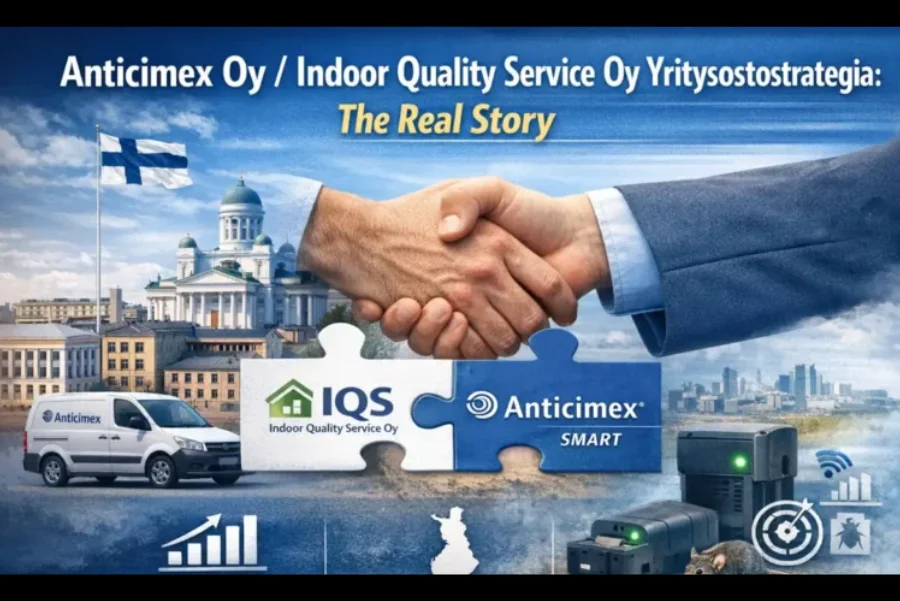
Another important shift is the growing focus on preventive building health services. Instead of treating pests or air quality problems separately, companies are moving toward full “healthy building” solutions. This includes pest prevention, moisture control, ventilation monitoring, and indoor air quality management under one system. This approach makes acquisitions even more important because no single company can easily build all these capabilities alone.
Looking ahead to 2026 and beyond, companies in this sector will likely focus on scaling faster, integrating smarter technologies, and offering more complete services. Acquisition-driven growth will remain a key strategy because it allows companies to adapt quickly in a changing market.
Final Words
The Anticimex Oy and Indoor Quality Service Oy acquisition shows how modern companies grow in practical ways. Instead of building every capability from scratch, they combine existing strengths. This approach is especially useful in industries where trust, local knowledge, and fast response matter.
The case makes one thing clear. Growth today is not only about size. It is about how well services connect. Pest control, indoor air quality, and building health services are no longer separate fields. They overlap in real customer problems, especially in older buildings and changing climates.
This acquisition also shows the importance of timing. Companies that move early can secure strong local expertise before competitors. At the same time, success depends on careful integration. If systems, people, and customers are not handled with care, even a good acquisition can fail in practice.
Another key lesson is that change must feel stable to customers. They should not experience confusion or service drops. Instead, improvements should happen quietly in the background while service quality stays consistent.
For you as a reader, the main idea is simple. When companies grow through acquisitions, the goal is not just expansion. It is to build a stronger, more complete service system that solves real problems better than before.
In this case, Anticimex did not just buy a company. It expanded its ability to protect indoor environments in a more complete way.
Arcadia Movers helps you move smarter with reliable, stress-free relocation services you can trust.