ML to OZ Explained: Practical Tips for Everyday Measurements
Measuring liquids might seem easy, but even a small mistake can make a big difference. Imagine adding too much medicine, pouring the wrong amount of juice, or messing up a recipe because you didn’t measure right. That’s why understanding liquid measurements is so important.
Whether it’s milliliters, ounces, pints, fifths, handles, or half gallons, all these units can get confusing. But once you know how they work and how to convert between them, it gets a lot easier. In this guide, you’ll learn how to measure liquids correctly, convert them easily, and use them in cooking, drinks, medicine, or even DIY projects—without guessing or wasting anything.
Why Liquid Measurements Matter
Imagine baking a cake and accidentally adding twice the amount of milk. The texture, taste, and even baking time can be off. Liquid measurements matter because accuracy ensures consistency. Chefs, bartenders, healthcare professionals, and scientists all rely on precise measurements to get the right results.
In the kitchen, a little too much or too little liquid can ruin a dish. In bartending, proper pours matter for both taste and alcohol content. In healthcare, even a small dosing error can impact patient safety. Accurate measurements also help reduce waste and save money—nobody wants to pour out expensive ingredients by mistake.
Consistency is key. If you can measure liquids accurately, you can reproduce results every time. This skill also makes recipes, experiments, and tasks easier to scale up or down.
Milliliters (ML): The Basics
What is a Milliliter?
It’s tiny—1 ML is one-thousandth of a liter. Think of a small drop of water, about 1 ML. It’s part of the metric system, which is used around the world because it’s easy to scale: 1,000 ML equals 1 liter.
This simple relationship makes conversions straightforward when you move to larger volumes. For example, a soda can (around 355 ML) is easy to visualize in liters: roughly a third of a liter.
Everyday Uses of Milliliters
You encounter milliliters more often than you think. Recipes, especially those from Europe or scientific cookbooks, often use ML for liquids like water, milk, or oil. In medicine, liquid medications, syrups, and IV fluids are measured in ML to ensure safety. Labs also use ML for experiments, chemical solutions, and research.
Even in home projects, such as mixing cleaning solutions or small garden nutrients, ML helps you stay precise. Knowing how to measure ML accurately is a skill you’ll use in countless real-life situations.
Tools for Measuring ML
To measure ML correctly, you need the right tools. Common options include:
- Measuring cups and spoons: Great for cooking and baking, often marked in ML.
- Syringes: Perfect for precise doses, especially medicine.
- Graduated cylinders: Used in labs for scientific accuracy.
- Droppers: Small ML amounts like eye drops or essential oils.
Using the right tool prevents mistakes. For example, using a kitchen spoon instead of a syringe for medicine could cause errors.
Fluid Ounces (OZ): How They Work
US vs UK Fluid Ounces
Not all fluid ounces are the same. The US and the UK (Imperial system) use slightly different measurements, and that small difference can matter more than you think. One US fluid ounce is about 29.5735 milliliters, while a UK fluid ounce is roughly 28.4131 milliliters. That’s only a tiny difference per ounce, but if you’re measuring several cups or following a recipe, it can add up.
For example, if you’re following a British baking recipe in the US and don’t adjust the measurements, your cake might turn out a little drier or wetter than expected. The same goes for drinks or medicines where precise measurements matter. Even small errors can change the taste, texture, or effectiveness.
In real life, cooks, bartenders, and healthcare professionals need to know which fluid ounce system they’re using. It’s always a good habit to check the recipe or the product label before measuring. That way, you avoid guesswork and get accurate results every time.
Common Uses
Fluid ounces are everywhere in daily life. You see them on beverage containers like soda cans, juice bottles, and milk cartons. In the kitchen, recipes often call for ounces, especially in the US, for liquids like water, milk, or oil. In medicine, liquid doses sometimes use ounces instead of milliliters, so knowing how to read them correctly is important.
For example, a 12-ounce soda can is about 355 milliliters. That’s an easy reference to remember for cooking or measuring drinks at home. In bartending, cocktail recipes rely heavily on fluid ounces for precise pours. Even DIY projects like mixing paints or cleaning solutions sometimes use ounces for accuracy.
Understanding where fluid ounces appear in real life helps you convert and measure confidently. When you know that an ounce is just under 30 milliliters, it’s easier to visualize and measure accurately without needing a calculator every time.
Measuring and Conversion Tips
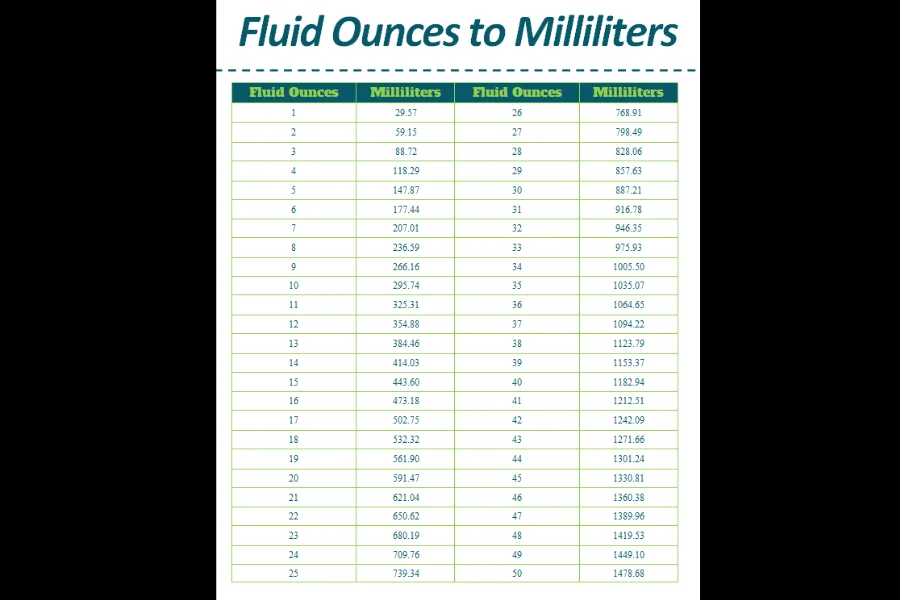
Measuring liquids in ounces is simple once you know a few tricks. First, always read the measurement at eye level. Second, be consistent with rounding. For most recipes, rounding to one or two decimal places is enough. Third, stick to one system at a time—don’t mix US and UK ounces in the same recipe.
For instance, when making a cocktail or a sauce, even a few milliliters too much or too little can change the result. Using proper measuring cups, spoons, or small cylinders makes a big difference. If you’re converting from milliliters, remember that one US fluid ounce is about 29.5735 mL. Small mental shortcuts help: roughly 30 mL equals 1 oz.
In practice, these tips prevent mistakes and save time. Whether cooking, baking, or measuring medicine, accuracy and consistency make your results reliable and stress-free.
Step-by-Step: Converting ML to OZ
Conversion Formula
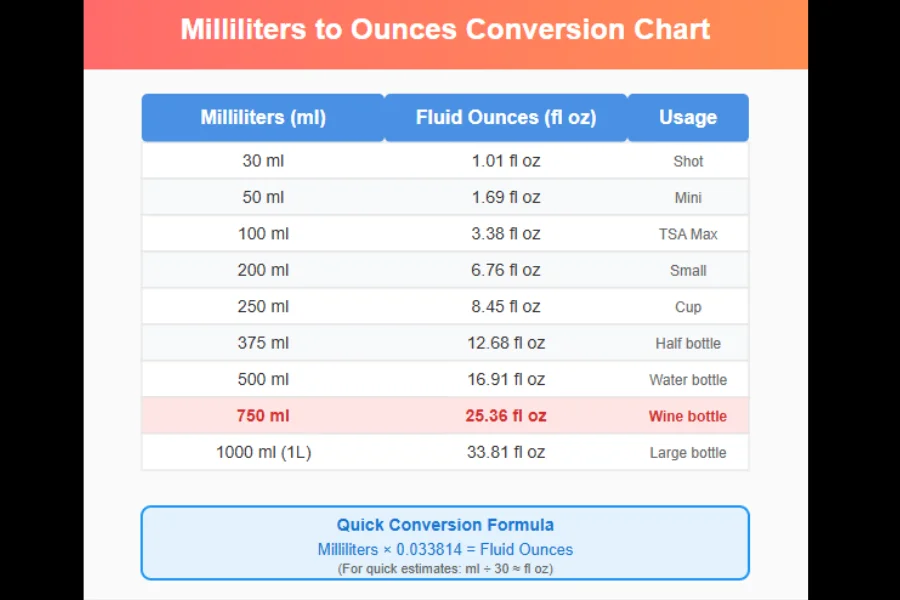
Converting ML to OZ is simple once you know the formula. For US fluid ounces:
1 ML = 0.033814 OZ
To get OZ, multiply the ML amount by 0.033814. To go from OZ to ML, multiply by 29.5735.
Examples and Practical Tips
Let’s see it in action with some everyday examples.
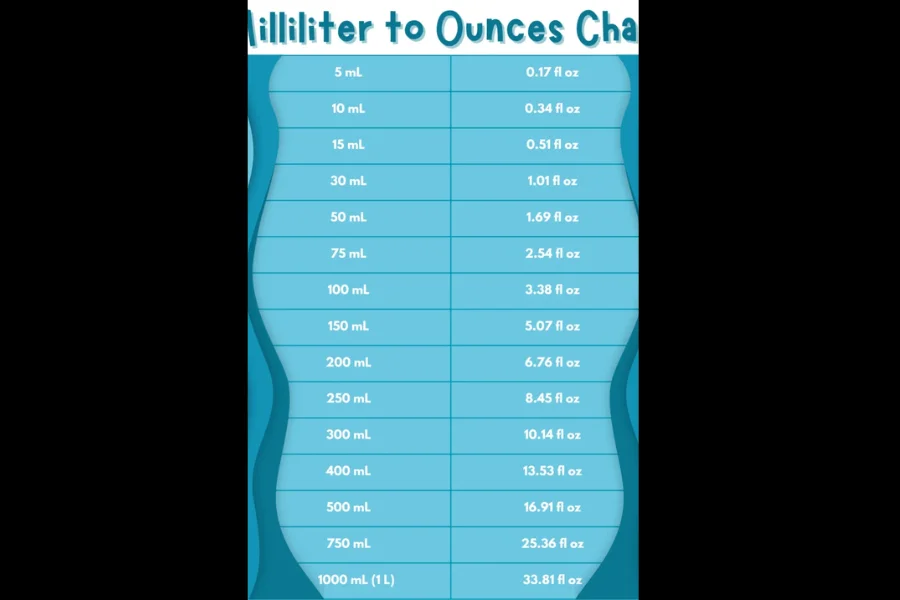
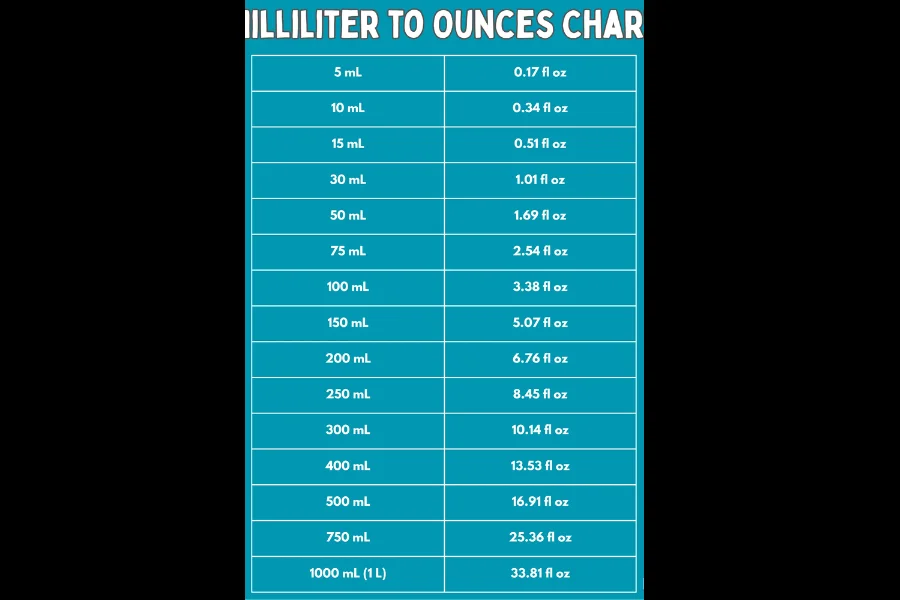
- 150 ML × 0.033814 ≈ 5.07 OZ
- 500 ML × 0.033814 ≈ 16.91 OZ
- 1000 ML × 0.033814 ≈ 33.81 OZ
Notice that decimals can be rounded depending on the situation. In cooking or baking, 5.07 OZ can simply be rounded to 5 OZ without affecting the recipe. But in medicine or lab work, keeping the exact decimals ensures accuracy and safety.
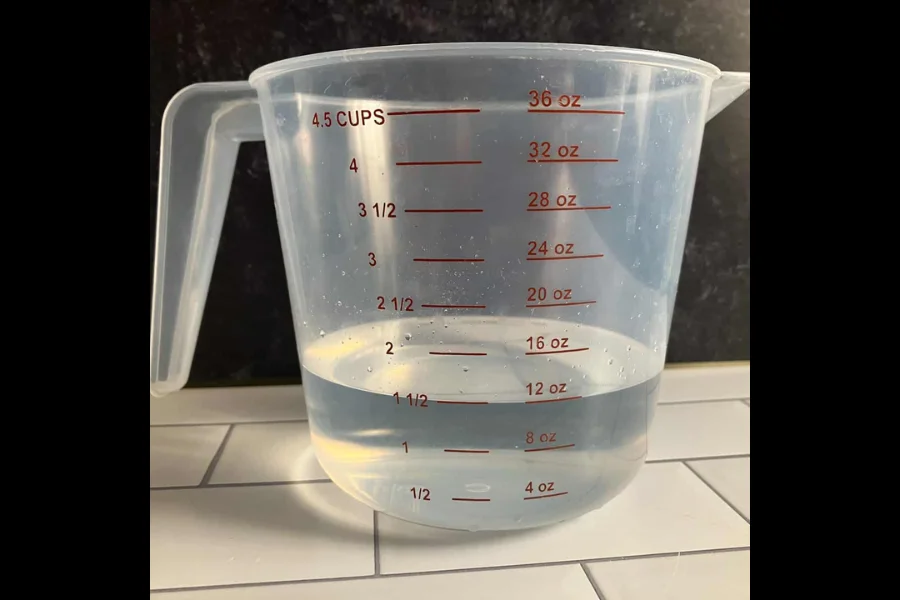
Here’s a tip from real life: when pouring liquids, measure with tools marked in both ML and OZ. This helps you double-check your conversions and prevents mistakes. Little habits like this save time and avoid frustration.
Using Charts and Online Tools
Not everyone loves math, and that’s okay. There are plenty of tools to make conversions easier. Online calculators let you type in ML and instantly get OZ. Printable conversion charts are great for kitchens, bars, or labs—they show quick equivalents at a glance, so you don’t need to calculate every time.
Even smartphone apps can do the work for you. Some let you switch between US and UK ounces, which is especially helpful when following international recipes. In professional settings, charts and apps reduce mistakes and speed up your workflow.
In practice, combining the formula with a chart or app gives the best of both worlds: accuracy and convenience. You can double-check your math and save time on repeated tasks.
Larger Units: Pints, Fifths, Handles, and Half Gallons
Pints (US and UK)
A pint is a common liquid measurement used for cooking, beverages, and recipes, but it isn’t the same everywhere. The US and UK use different pint sizes, which can be confusing if you don’t check first. In the US, a pint equals 16 fluid ounces or roughly 473 milliliters. In the UK, a pint is slightly larger—20 fluid ounces or about 568 milliliters. While the difference may seem small, it can affect recipes, especially in baking, brewing, or cocktails, where precision matters.
For example, if you have 1,000 milliliters of milk, that equals about 2.11 US pints but only 1.76 UK pints. That difference can change the flavor or texture of a recipe. Pints are commonly used for milk, beer, soups, and other everyday liquids. Restaurants, bars, and older British recipes will follow different pint systems, so always check which system your recipe uses.
Conversions:
US pint: 1 pint = 16 OZ ≈ 473 ML
UK pint: 1 pint = 20 OZ ≈ 568 ML
Example:
1,000 ML ÷ 473 ≈ 2.11 US pints
1,000 ML ÷ 568 ≈ 1.76 UK pints
Fifths (Liquor Bottles)
A fifth is a liquor measurement equal to one-fifth of a US gallon, or roughly 757 milliliters. Fifths became the standard for spirits like whiskey, vodka, rum, and other alcohol in the United States. They are convenient for home bars, parties, and restaurants because the bottle size is manageable and easy to track. Fifths are mostly used in alcohol but occasionally appear in old recipes.
Converting milliliters to fifths is simple: divide the total milliliters by 757. For instance, 1,500 milliliters of whiskey equals roughly 1.98 fifths—almost two full bottles. This makes it easy to plan cocktails, stock a bar, or estimate servings for parties. Knowing the fifth conversion helps you avoid buying too many or too few bottles and ensures your recipes turn out as intended.
Conversion:
1 fifth = 757 ML
Example:
1,500 ML ÷ 757 ≈ 1.98 fifths
Handles
Handles are large liquor bottles holding 1.75 liters, which equals 1,750 milliliters or about 59 fluid ounces. They are popular in bars and for large events because they reduce the need to open multiple smaller bottles. Handles are practical for bulk servings or making large batches of cocktails. They are also helpful for inventory management in professional settings, helping bartenders track supplies efficiently.
To convert milliliters to handles, divide the total milliliters by 1,750. For example, 3,500 milliliters of vodka equals 2 handles. While handles are mainly used in bars or for big events, knowing this measurement is useful for home use if you buy alcohol in bulk or mix large cocktails. They are less common in recipes or cooking but are a standard in the beverage industry.
Conversion:
1 handle = 1,750 ML ≈ 59 OZ
Example:
3,500 ML ÷ 1,750 ≈ 2 handles
Half Gallons
A half gallon is a familiar household measurement equal to 64 fluid ounces or roughly 1,892 milliliters. It’s commonly used for milk, juice, and other liquids in daily life. Half gallons are large enough to store a decent quantity of liquid but still easy to handle. Recipes often reference half gallons in the US, especially for milk, cream, broth, or other bulk cooking ingredients.
Converting milliliters to half gallons is simple: divide the total milliliters by 1,892. For example, 1,000 milliliters of milk equals about 0.53 half gallons. This makes it easier to estimate quantities for cooking, baking, or serving beverages. Half gallons are practical, widely available, and straightforward for both everyday and culinary uses. Using this measurement helps ensure accuracy without complicated math.
Conversion:
1 half gallon = 64 OZ ≈ 1,892 ML
Example:
1,000 ML ÷ 1,892 ≈ 0.53 half gallons
Quick Reference Conversion Table
| Unit | ML | OZ | Pints (US/UK) | Fifths | Handles | Half Gallons |
|---|---|---|---|---|---|---|
| 100 | 100 | 3.38 | 0.21 / 0.18 | 0.13 | 0.06 | 0.05 |
| 500 | 500 | 16.91 | 1.06 / 0.88 | 0.66 | 0.29 | 0.26 |
| 750 | 750 | 25.36 | 1.59 / 1.32 | 0.99 | 0.43 | 0.40 |
| 1000 | 1000 | 33.81 | 2.11 / 1.76 | 1.32 | 0.57 | 0.53 |
| 1750 | 1750 | 59.17 | 3.69 / 3.08 | 2.31 | 1 | 0.92 |
| 1892 | 1892 | 64 | 4 / 3.33 | 2.5 | 1.08 | 1 |
Practical Applications of Liquid Conversions
Understanding liquid conversions isn’t just about numbers—it’s a skill you use in daily life. In cooking and baking, knowing how to convert milliliters to ounces, pints, or even half gallons helps you adjust recipes accurately. For example, if a recipe calls for 500 milliliters of milk but your measuring cup only shows ounces, converting it correctly ensures the dish turns out as intended. Even a small error can change flavor, texture, or consistency, especially in baking where precision is key.
In bartending, liquid conversions become essential. Pouring a cocktail using fifths, handles, or ounces requires accuracy to maintain the right taste and alcohol content. For instance, 1,500 milliliters of whiskey equals nearly two fifths, which helps bartenders prepare drinks efficiently for large groups.
Medicine and healthcare also rely heavily on precise conversions. Liquid dosages for children or adults may be listed in milliliters, while household syringes or cups are marked in ounces. Knowing the correct conversion can prevent underdosing or overdosing.
Even in home and DIY projects, conversions matter. Whether you’re mixing cleaning solutions, paints, or fertilizers, getting the ratios right ensures safety and effectiveness. Accurate measurements save resources and prevent mistakes.
Tools and Resources for Accuracy
You don’t have to rely on guesswork when measuring liquids—there are many tools that make it precise and easy. First, measuring cups and spoons are the most common tools for kitchens, allowing you to measure small or large amounts in milliliters or ounces. Graduated cylinders and syringes are useful in labs or healthcare, giving highly accurate readings for liquids.
Digital scales are another valuable tool, especially when converting between weight and volume. Some recipes or chemicals list ingredients by grams or ounces, and a scale lets you measure accurately without estimating.
Online calculators and conversion apps are excellent for quick conversions. Enter the amount in milliliters, ounces, pints, or gallons, and the app instantly gives the equivalent, which is perfect for cooking, bartending, or scientific experiments. These tools save time and reduce errors.
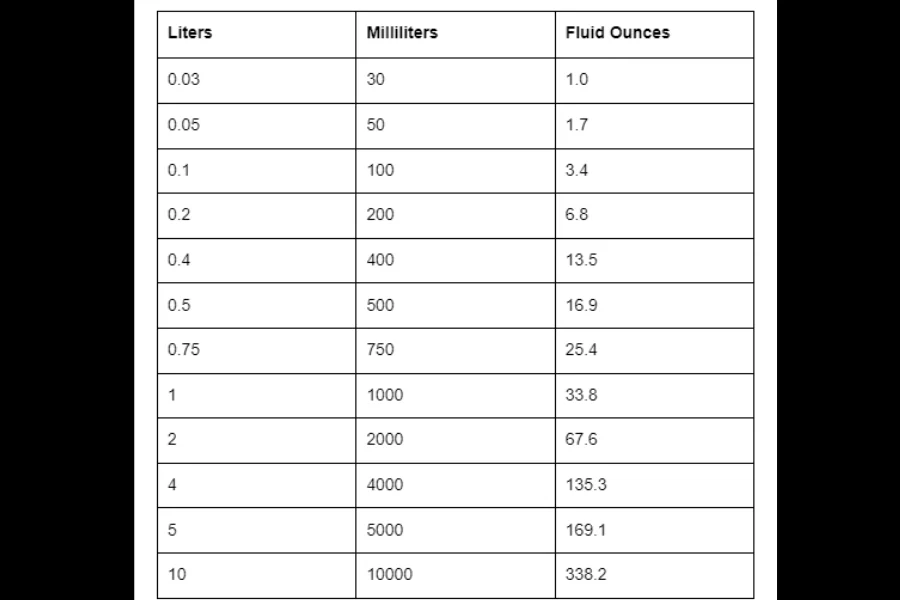
Reference charts are also very handy. A well-made chart shows the most common liquid conversions at a glance. You can keep one in your kitchen, bar, or workspace to quickly check measurements without opening an app or doing math.
Final words
Measuring liquids accurately is more than just math—it’s a skill you use every day. Whether you’re cooking, baking, mixing drinks, giving medicine, or working on DIY projects, knowing how to convert milliliters to ounces, pints, fifths, handles, or half gallons makes a big difference.
Using proper tools like measuring cups, syringes, digital scales, or online calculators ensures every measurement is precise. This prevents mistakes, saves ingredients, and keeps your recipes, drinks, and projects consistent.
Even small errors can affect flavor, texture, or safety, so mastering conversions makes life easier, safer, and more efficient. Once you get the hang of it, measuring liquids becomes second nature.
Come back to Arcadia Movers for fresh stories that actually matter to you.